Wednesday, August 18, 2010

White Cliffs

After spending six lovely quiet days in Copi Hollow, we headed back to Broken Hill for three days to top up supplies before heading up to White Cliffs. During the three days in Broken Hill, I was able to catch up with a cousin whom I didn’t know of until recently. It was good to be able to spend a couple of hours with her & find out more of my family ties. The weather was wild, wet & woolly for those three days.

While driving to White Cliffs we noticed that the landscape is now very green, a quite different view from what we saw the last time we drove this way in 2006; then it was very dry & farmers were driving their cattle/sheep along the roadside in order to find feed for them. Some farmers were even taking them up to 50kms away to find greener pastures. This year however, is quite different, significant rains across NSW/Qld have made a huge difference to the landscape. As we got closer to White Cliffs a sign said, ‘White Cliffs Opal Field: The First and Friendliest’.

White Cliffs is in a semi-arid area of Far Western NSW (approx 100km north of Wilcannia)-as such you will find stands of eucalypts, mulga, leopardwoods (quite a variety of trees in fact but not as in forests as you would find in coastal areas); there is a variety of low shrubs & grasses. In White Cliffs itself, much regeneration work has been done to rectify some of the mining practices of the past; so many trees were cut down to provide materials for housing and shoring up mine shafts. White Cliffs is known as Australia’s first commercial opal field. It’s documented that opal was found as early as 1884 by four kangaroo shooters. The town itself is small but spread out. From the air one can see a lot of white coloured craters which has been described as a ‘lunar landscape’. It has been estimated that at the height of mining activities, 50,000 holes were dug; this is evident from the air.

White Cliffs has a summer where daytime temperatures can reach 44-46oC for days on end, in order to escape the oppressive heat; miner’s homes are frequently built underground, often in the very mines themselves. These homes are known as ‘dugouts’ having been dug deep into the hillsides. These dug-outs can have all the conveniences of any modern home but are environmentally friendly, little heating or cooling is required with an all round temperature being around 22oC. With a population of approx 210, (which apparently is a floating population), there are about 140 dug-outs while the remainder of residences live above ground.

After a morning walk around town, we got to see the Solar Power Station which incidentally, was the first commercial solar power station in the world. Originally the Power Station was established as an experimental facility by Australian National University researchers. It powered the local hospital, school, post office & twelve residences. The solar plant is now closed but has earned a national award that will see it preserved as a piece of alternative energy heritage. The White Cliffs Power Station is nationally recognised as an iconic engineering project equal in status to the Snowy Mountains Scheme, the Sydney Harbour Bridge & the Parkes Radio Telescope.

A walk through the Pioneer Cemetery demonstrates the conditions that families endured in the harshness out here. Many young children died from Dysentery, Typhoid & Diphtheria. The youngest child being only 12hours old with the average life of a child was under 4 years of age. Later in the day we drove around some of the mines & did some fossicking of our own. Over the four days we manage to find a few small pieces of opal, nothing that will make us famous or rich though. We did however have a lot of fun fossicking. White Cliffs is the home to the “Opal Pineapple”; it is the only opal field where these collector’s pieces of mineral are found.

While in White Cliffs we were able to catch up with the daughter & family of my cousin whom we met earlier in Broken Hill. It was good to spend some time with them to reminisce over past family members. Peter, Joanne & Kaija their daughter live in a lovely dugout which they built themselves, next door is their first dugout, now a commercial tourist venue, PJ’s Underground B&B.

Just a quick note; while we lived in Aberfoyle Park, 20k from the city centre, we weren’t able to get ADSL or a good wireless broadband connection, here out in the middle of nowhere we were getting an excellent connection, best ever wireless performance; go figure!!

Click on the link below to view some photos of White Cliffs.


http://picasaweb.google.com/108879761974384702036/WhiteCliffsNSW?feat=directlink

Sunday, August 8, 2010

KINCHEGA National Park, August 7th

Kinchega National Park is situated between the mighty Menindee Lake and the River Darling on the Eastern Boundary and encompasses Cawndilla Lake to the South and West and beyond. Approximately 44 000 Hectares in area, there are camping sites, scenic drives and historical locations to enjoy in typical semi-desert surrounds. After thousands of years as traditional Aborigine occupancy, the Park was once the 800 000 Hectares Kinchega-Kars Pastoral Lease; from 1870 to 1967 when the Kars Lease was dedicated as a national park. Instead of sheep, the park is now home to Kangaroos and Emu, numerous birds and apparently, a lot of desert reptiles of which we managed to keep clear.
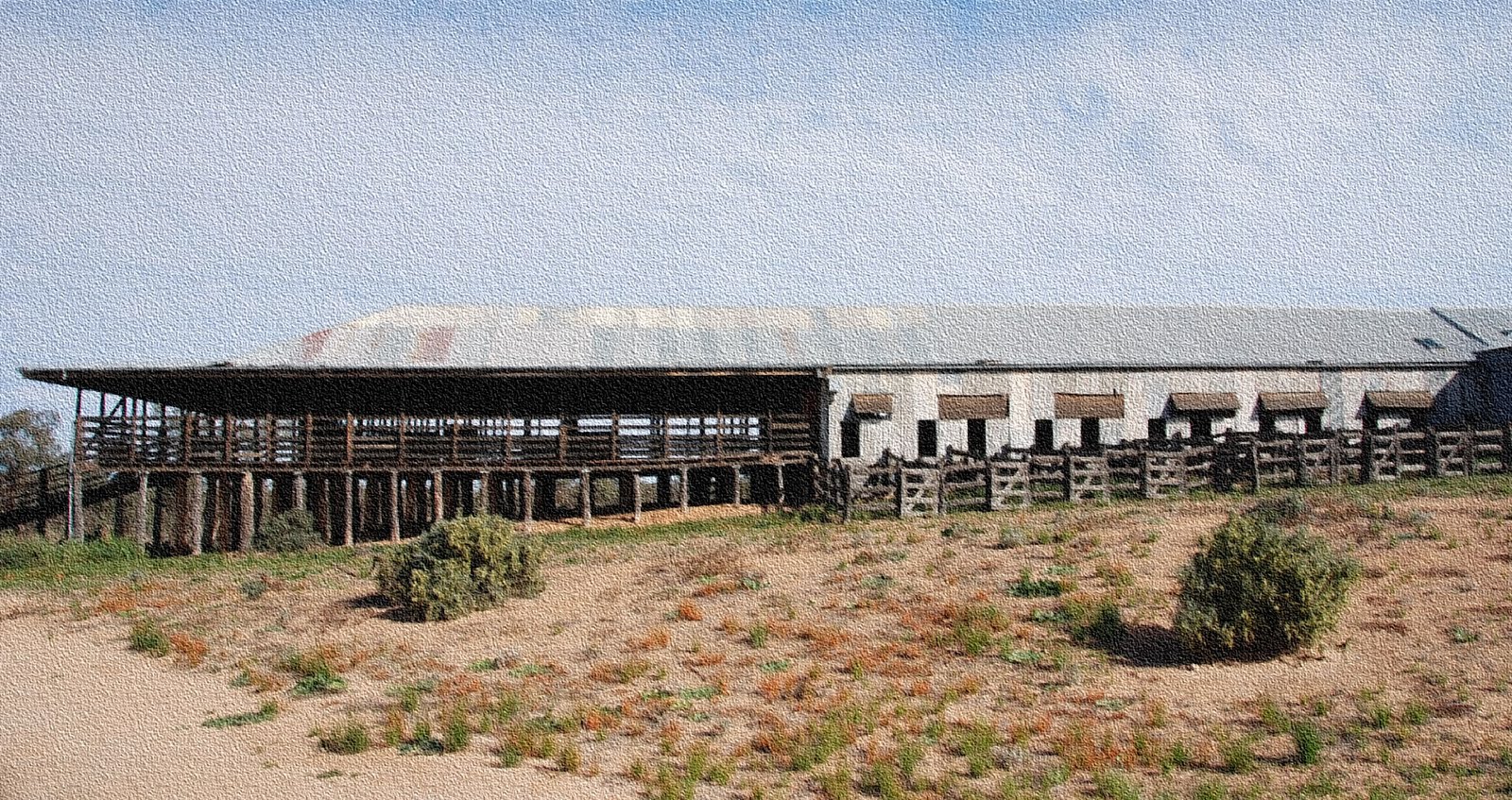
The Park has several highlights, the original homestead site and the old original shearing shed is really something to see. In the shed are the left over overhead pulleys that drive the shears, old wool press and the steam-boilers that powered the original machines of the shed. The old shearing quarters have been restored and made into conference rooms, accommodation and catering facilities.
There are three self-guided drives around the park, subject to weather conditions, can be done with a 2-wheel drive vehicle. However, it only needs a little rain to make some areas very sloppy and boggy. The River Drive would be worse affected if wet. This drive though, proved to be the most interesting to us. After visiting the Shearing Shed, we found our way onto the river-side track and as the river winds itself in a serpentine manner, there were many scenic spots to photograph. The river over time has cut deep into the flat plains at the edge of the Park and most of the banks were quite steep to the water’s edge. There are pointers on the track indicating the floods of 1976 and 1983-1984, several feet above the existing banks of the river. Bird-life, Emu dad with chicks and the odd lazy kangaroo added to the pleasure of the drive. The “road” around the river is a 2-wheel track with dips, tight turns and overhanging trees. A highlight of the River Drive is the wreck of the Paddle Steamer Providence, Australia’s only inland ship-wreck. Only part of the boiler remains where it was blown to when an explosion demolished the boat and killed members of the crew. It seems that the crew had been sampling the delights of the Menindee pubs before stoking the boiler fire but forgetting to fill the water tank.
There are about 35 allocated camping spots along the river, ideal for tents and camper trailers but not suitable for our caravan; the sites are ok, just getting there would be dicey. Weir 32 is a popular spot and here we spotted several anglers that were actually catching fish.
Caravans can be camped at the Cawndilla Lake site; this is a good area at the lake side that should appease canoeists or bird watchers alike. Sunsets over the huge lakes are spectacular and when the air is still, the reflections of the submerged trees, clouds and the flaming red rays of the sun make for one of nature’s most beautiful sights.
Kinchega National Park, a place to visit again.


Click on the link below to view more photos.

http://picasaweb.google.com/108879761974384702036/KinchegaNationalParkNSW?feat=directlink

Thursday, August 5, 2010

Broken Hill - 'Art Gallery without the Walls'

After four lovely quiet days in Silverton, it was time to move on to Broken Hill. Apart from the 39 dips along the road back into town, the drive wasn’t too bad. I did count the dips, but somehow I missed 1 or 2 along the way. We chose to stay at the Broken Hill City Caravan Park; a bit more expensive than the other two in town, but after taking a quick look at them during the week, a much tidier park.

For the first half of the week we were kept quite busy visiting the many attractions, as one does. As we know, Broken Hill is an active mining town; the wheels are still turning at the Perilya headframe. For generations the miners work was backbreaking and dangerous with long hours and low pay. However, this all changed in 1920 when, after the miners being on strike for 18 months, they were awarded improved safety conditions, health conditions, health monitoring and for the first time a 35 hour week. The actions of these battling miners would eventually influence the rest of Australia’s working conditions.

Our first port of call was a drive up to the Line of Lode Miner’s Memorial and restaurant which stands prominent on the top of a mullock/slag heap behind the railway station. It was built as a memorial to the 900 or so miners who have lost their lives working along the Line of Lode. On 8th October 1902, two young lads (mullockers) Thomas 19yrs & Leopold 21 were killed by a fall of rock in Stope A5, 500ft level. Owing to the ground conditions their bodies have never been removed & remain the only fatalities still entombed on the Line of Lode.

After a good night sleep we decided to venture out to the Broken Hill Sculptures & Living Desert Sanctuary, but not until we had collected the gate key (we were a bit lazy & didn’t want to do the steep walk up to the sculptures). Each of the 12 sculptures is designed by a different artist. The artists came from Mexico; Tiwi, Bathurst Island; Tbilisi, Georgia; Damascus, Syria; Katoomba, NSW; Rustiva, Georgia; Koolewong, Australia & Broken Hill, NSW. Some of the carvings were obvious as to what they resembled while others needed to be explored closer. As quoted by Dr Ahmad Al Ahmad, sculptor “The symposium is a necklace for the maiden – the maiden being the incredibly beautifully desert landscape around the mountain.”
After spending time soaking up the ambience amongst the sculptures Colin headed back down the way we came while I walked down to meet him at The Living Desert Flora & Fauna Sanctuary. The view across the Barrier Ranges was stunning & most enjoyable. The 2km Sanctuary Cultural Walk is nestled within the 2400ha reserve protected behind an electric predator-proof fence. The trail had 9 points of interest along the walk including many clusters of the Sturt Desert Pea which is now in full flower. Fauna was limited to a few lazy old Kangaroos that wouldn’t stray far from the provided feed bins.

We just had to visit ‘Pro’ Hart’s (Kevin Charles Hart) Gallery while in Broken Hill. Pro started putting pen to paper at an early age. His correspondence school teachers were impressed with his talent that they encouraged him to run with it. When he was working down in the mines as a train driver he continued to paint. He often said that it was the only thing that kept him sane. We were so overwhelmed when we entered his gallery. I have not come across an artist who was able to display the variety of techniques, styles & medium. Not only was he an artist with paint, but also a sculpture. We had the opportunity to spend a short time talking with his widow, Raylee. Amongst the vast array of paintings, glass etchings etc; over 3 floors of his gallery, was his famous ‘Dragonfly’ masterpiece which he did on a piece of carpet; remember the ad? (“Oh! Mr Hart, what have you done?”). I’m sure he would have been an inspiration to any young artist who is setting out in this field of work. If you ever come to Broken Hill, why not call in to the gallery. We would recommend the visit.

Another point of interest was The Silver Tree. The tree was created by a German silversmith Henry Steiner in 1878-79 for a Melbourne exhibition. The tree is a fabulous & elaborate display of craftsmanship decorated with animals & outback figures. Over 600mm high & weighing 8.5kg, the tree is hollow & the base is beaten out to a single sheet of silver. Have a look at the link for details.

We found Broken Hill to be a great place to visit. It is a busy city; one event highlighted the way the town is, a person was mugged in daylight and it made big news because these things don’t normally happen in the town. It is considered a safe place to bring up your children. We found the people in the town shops, cafes and tourist venues to be very friendly and welcoming to tourists. We had some great home-made soup, chips and hot chocolate at one cafe. The local Toyota dealer went out of the way to get a small problem attended to. The City is bisected by the slag heaps from the Line of Lode Mining past. I think that this is an ugly reminder of the reason for Broken Hill. However of disappointment to these visitors, there is little to see that reflects the vast wealth that the town has created. Though the people are resilient to the downturns of the industry, they are creating work alternatives but the numerous old houses along the wide streets, the tired old shops, don’t reflect any of the opulence that the mines have created.

There is a lot of the classic Australia evident in Broken Hill and I can’t help but feel that there, the old values of mateship and tolerance will prevail.

Copi Hollow, August 3rd-6th
http://maps.google.com.au/maps?f=q&source=s_q&hl=en&geocode=&q=Copi+Hollow,+New+South+Wales&sll=-25.335448,135.745076&sspn=32.628652,54.580078&ie=UTF8&hq=&hnear=Copi+Hollow+New+South+Wales&z=10
We found this cute sounding place by accident, as you do. We were at Broken Hill and wanted to go south-east to have a look at the Menindee Lakes System, a huge water storage area of the River Darling. Many South Australians suspect that this is where all the water that should be coming down to the River Murray is being stopped.
We found a pamphlet about the caravan park at Copi Hollow, one of the smaller lakes. If you look for it on Google Earth, you will see that it is one of two lakes joining Lake Pamamaroo to the bigger Lake Menindee. The Caravan Park is owned by the Broken Hill Speedboat Club Inc; there isn’t much water near Broken Hill so the club members set up this place, about 110km away, for their chosen recreation away from the mines.
This is a good year to come as the lakes are all full and the surrounding land is covered in rich vegetation, a far cry from the previous dry years. All we need is for the fish to come back, no luck tempting them yet.
It is quite amazing to come across these lakes for the first time, the River Darling has wound its way though some of the driest semi-deserts of New South Wales; the land all around is pretty flat for hundreds of kilometres. The lakes must be a natural basin off of the river. Aborigines lived and hunted in this region for thousands of years and would have been used to the seasonal ebb and flow of the river and lake water levels, winter and summer seasons would have shown a marked difference. However, since Europeans came to Broken Hill, a reliable all-year water supply was needed so the Menindee Lakes Scheme was started. Construction of a Main Weir, several Control Blocks and additional channels to direct all water from the Darling into the Lakes for storage have since been the major source of water for Broken Hill and surrounds. There is a 100-odd kilometre pipeline connecting the precious resource to the north.
Attractions here of course include the lakes and many forms of water sports, trail bike riding; walking trails and just quiet relaxation. Probably not that quiet when the Speedboat Club is holding a regatta. Water Skiing is their main activity. The caravan park is a little village of around a hundred permanent caravans, lucky for us this week nearly all are unoccupied.
We have had a relaxing three days here, backed up on the lawns abutting the lake-front, feeding the friendly minor-birds, and catching up with a bit of writing and photo editing. Gorgeous sunsets before the rain!
A little gem!

Click on the link below to view more photos

http://picasaweb.google.com/108879761974384702036/BrokenHillToCopiHollow?feat=directlink

Wednesday, July 28, 2010

Napperby to Silverton, NSW

“On the road again, we’re on the road again”. That’s right after spending about 9 weeks at Napperby it’s time to set off again. As you will recall from my last entry, we bought another tow vehicle which Colin has spent time in tweaking some of the electrical system, (extra battery). We did eventually sell our other 4x4; sad to see it go as it has been very faithful to us & hasn’t missed a beat all the time we have travelled.

Well lots of things have happened while we’ve been so-called resting. The one & only good fishing day since being back, Colin & Guy managed to pick up a good feed for dinner that night. Well done boys! A bad dust storm hit us & we couldn’t see much in front at all; we did however notice a few caravans travelling back to Adelaide in the awful weather – not a good travelling day. My younger sister, her two boys & mother-in-law (from South Africa) came up for the day. Lots of family birthdays during the last couple of months. A quick visit to Adelaide for a couple of days gave us time to catch up with some shopping & a visit to my dad’s for tea. Another quick trip up to Kingston-On-Murray to visit Nick (Colin’s grandson) for his 6th birthday; (several days later he broke several bones in his foot while entertaining his little mates for his birthday party).
I have been battling a bad back for the last 4 weeks with regular visits to the chiropractor. Slowly it has been improving. Josh, Kendehl & Arthur (Smurf) managed to make a visit on my birthday; it was so good to be able to spend some time with them. Smurf is now 15 months & beginning to walk & exploring anything & everything. Shilo the Labrador loved having him around, wandering all the time what was this thing that moved into her space & wanting to play with her toys. She was good with him though!

Now back to our next stage of our journey. We left Napperby on 21 July heading towards Broken Hill via Silverton. We set off at around 11:20am for our first stop at Jamestown as we had some business to attend to. Morning tea around at the RM Williams Park where we read all about R M Williams, very interesting. Next stop was to be Peterborough; time out for a good stretch & to reminisce of my grandparents/mum’s home town. Overnight stop was to be at Yunta, a small town of a population of around 800 (that’s what the sign says anyway). By the time we arrived at Yunta the cold air was settling in. I wasn’t really in the mood for cooking so a visit to the pub across the road was in order. Our order came & I really didn’t want to leave the warmth of the fire which I was sitting on to go & eat in another room, but what must be, must be. Our site was within 20m of the working railway line. The trains were relatively quiet with the last one passing through at about 6pm ish & no more until after 7am. If any did come through the night we didn’t hear them. This morning (Thursday) was quite chilly with the temperature reading about 4o on the clock & the fog was thick. I couldn’t even see the train track from our van. By about 9:15am the fog had lifted slightly & so we continued on with the next stretch to Silverton. After about 30kms the fog lifted completely & we were once again in the warm winter sun, now we could thaw out!

As we head towards the SA/NSW border the scenery changes to a rugged environment. We begin to wonder what one would do as a living out here – not much more than cattle, sheep & maybe emu producers. At Cockburn, on the NSW side of the border, it was time for another stretch & to our amazement we came across a very large motor yacht being transported to Newcastle. Colin went over to speak to the escort guys only to be told that they had been there for 3 days already. Problems it appeared.

By early afternoon we had reached our destination of Silverton (Penrose Park) after travelling on about 25kms of rather ‘dippy’ road; in fact there are 39 dips in total which allow the water to flow during heavy rains. Silverton is a popular destination for movie makers. It has been the scene for more than 140 films & commercials such as, Bryan Brown’s Dirty Deeds, Mad Max II, Priscilla Queen of the Desert, XXXX beer ads & the Royal Flying Doctor series. This near-ghost is town full of interesting arts and craft shops. Silverton is a fascinating town, once a thriving mining centre of 3000, it is now a virtual ghost town of about 50 residences with a number of historic buildings, several art galleries and museums and a pub. The pub has legendary stories about events and the famous people who have visited, along with a replica of The Interceptor from the Mad Max movies. The new movie was supposed to begin filming shortly, however owing to the landscape being ‘too green’ it has been postponed. The town is surrounded by 4000 hectares of land known as The Silverton Common, in a semi-arid zone.

Penrose Park (which is where we stayed for a few days) was named after John Penrose, born in Yorkshire in 1850. The park was built and maintained by Broken Hill mines as a place of respite for mining families. The park consists of playgrounds, tennis courts, cricket ground and lovely bush gardens; quite a nice bush camp ground. The old Silverton Cemetery located next to Penrose Park. Headstones still standing there date back as early as 1883. Silverton is home to a group of long time artists such as John Dynon, Peter Browne Gallery & Horizon Gallery). Tourists & locals alike congregate at the top of the hill to watch the magnificent sunset across the Mundi Mundi plains where you can see a huge landscape that is as flat as a tack as far as the eye can see. The red barren land of the Mundi Mundi Plains stretches out without a hint of a man made structure. You feel as if you've landed on a new planet.

Our first day at Silverton saw us venturing out on the 2 hour Heritage Walk Trail which took us up & over hills with stunning views that overlooked the township & the breathtaking views of the Mundi Mundi Plains. While taking photos of some fauna back in town, Colin happened to notice the ‘Mad Max’ vehicle on the back of a trailer. We went up to give the owner Adrian some assistance to get it off the trailer which, then led to a half-hour chat. In the evening a few of the locals met up at the pub for a good chinwag. Having done the big walk, it meant that for the rest of our stay we could just meander around town soaking up the atmosphere, exploring the various museums especially the school, which brought back some memories. The locals were very friendly & chatty. If you ever get the chance to visit Broken Hill, why not go that extra mile (25 kms) & visit Silverton, it is worth the trip.


Click on the link below the picture to view some photos.


http://picasaweb.google.com/108879761974384702036/NapperbyToSilvertonNSW?feat=directlink

Thursday, June 24, 2010

Werribee South CP to Napperby

Well, it’s time for us to move on from Werribee. It has been a busy time for us over the last 2 months that we have spent near Melbourne. After viewing numerous makes, models & sizes of 5th Wheelers, we have finally made our decision on the manufacturer that we wish to build our 5ver. We have decided on a Truelux 28ft to be customised on the Opal Series. Truelux are a family business who had infinite patience as we visited three times with the most obscure queries/questions. They simply reiterated that the only dumb question is the one not asked. Have a look at their web site: http://d454457.u23.fasthit.net/home.html.

One would say that that was the easy decision taken care of, now we have to decide on the tow vehicle which is proving to be a testing & stressful time. Nothing is ever straightforward as we originally think. The more we delve into this, the more we come up other issues, a bit like a domino effect.

There are still lots of places to see & things to do that we’ll have to leave for another day. Our last week at Werribee proved to be quite interesting with us having Arthur (Vicki’s grandson – 13mths) come & stay with us for a few days while his mum & dad make a quick trip back to Adelaide to sort a few things out. It was quite strange to have this ‘foreign object’ sleeping between us at night; not an exercise we are accustomed to. The days when he couldn’t go outside to play due to the wild, wet & windy weather proved to be quite testing at times. However, once the sun came out to play so did he. With one leg in front of the other he would do his ‘crab crawl’ over to the neighbour to visit their little Chihuahua. We left Werribee on Monday May 10th & headed to Col’s daughter’s place at Kingston-on-Murray via the Sunraysia Highway (connects Mildura to Ballarat) which we’re looking forward to travelling along.

There must have been a club travelling out of Learmonth as we passed a number of motorhomes & a 5ver. Just outside of Lexton we came across another wind farm information bay overlooking the wind turbines in the distance. The information bay was I feel to be the most informed site we have come across so far. The day had been quite a hard day as the wind wasn’t on our side, so by the time we got to Teddington Reservoir, North West Victoria at Stuart Mill (about 35km from Avoca; midway between St Arnaud & Avoca) we decided to stay overnight. St Arnaud Range National Park has 13,900 hectares of mainly steep, forested terrain and is an ideal place to experience what the forests were like before the gold rushes. The park has one of the largest intact areas of Box-Ironbark vegetation. It encompasses the former Kara Kara State Park and much of the St Arnaud Range State Forest.

It was a lovely freebie spot to stay & wind down. This time gave me a good opportunity to sort out our remaining fruit & vegies so that we can get over the border without having to throw anything away. The next day when we awoke to a very frosty morning & had an overnight temperature of a warm 10.30C, we decided to stay another day as I appeared to have picked up a 24 hour tummy bug & wasn’t feeling too bright at all. While here, we took the opportunity to explore our lovely surroundings of the once very popular reservoir.

Wednesday morning & it was time to move on to K-o-M where we’ll stay a couple of days & catch up with Col’s daughter & family. We thought yesterday was cold, but after taking a look at our thermometer it showed us that yesterday was warm comparatively – a Brrrrr 0.40C. By the time we reached St Arnaud, it was time for a short stop to recharge our batteries with a walk through the township. St Arnaud was named after Marshal Jacques Leroy De St Arnaud, the commander of the French forces (b1796 – d 1854).

A stretch stop at Birchip to take a look around town & to see the Big Red Mallee Bull which stands proudly in the median strip of the main street through town proved quite an excitement. Not far out of town when I felt something on my leg which I thought was just a breeze coming from our car air conditioner & just brushed off. However, I had the same feeling but this time on the other side of my leg, but this time felt something more. My greatest fear was that it was a spider (which I am terrified of). After insisting that Col pull over to the side of the road & stop the car, I rolled up my trouser leg only to find a big locust. What a relief!!!

UPDATE June 2010

After several weeks of looking at the available tow vehicles, we now have purchased a 2007 Landcruiser VHD79R Cab Chassis. This is one of the recommended vehicles that can adequately tow the new van. Currently the vehicle is fitted with a custom built camping canopy that, being useful as we await the fifth wheeler, will have to be removed to have the 5ver hitch fitted when the van is made.
We originally wanted to use an Isuzu D-Max twin cab ute, however, the decision to go to the 28ft fifth wheeler counts this option out. In Victoria, we visited three companies that imported and converted the popular US tow vehicles, Ford, Chevrolet and Dodge RAM. These are beautiful vehicles but at what cost? So we decided to compromise and save by buying the Toyota. Refer to our update picture albums.

We are still at our home base at Napperby where we can relax while setting up our Toyota; additional battery, some minor servicing of the van and to sell our current 4WD, our ever reliable Mitsubishi Pajero, it will be sad to see it go.

The school holidays are nearly upon us once again. We will be here for a while, at least until the end of the school holidays when we’ll continue on with our travels. Testing the new tow vehicle!

To all my past colleagues at OE, have a safe break with your families.

Click on the link below the picture to view some photos.